


Simple, Effective, Delicious
In 2017, researchers in Australia made a surprising discovery: food can work as an antidepressant. Not the quick fix of a sugar rush or a caffeine boost — but a real, lasting food plan that feeds your brain with the nutrients it needs to heal.
The diet is packed with B-vitamins, omega-3s, antioxidants like flavanols, and anti-inflammatory foods. When researchers compared it head-to-head with general counseling for depression, the results were striking. People on the diet recovered from depression at four times the rate of those in counseling alone.
Since then, four independent research trials have confirmed those results, each showing high recovery rates with this nutritional approach. Here’s why it works. The nutrients in this diet build the neurotransmitters that keep you energized and motivated. They replenish the protective coating around your nerve cells, and they balance the neurohormones that connect your mind and body.
Eat More
Seven Foods to Enjoy in Abundance
- Fruit
- Vegetables
- Beans
- Fish
- Nuts, seeds, and olives
- Whole grains
- Extra virgin olive oil
These seven foods are the foundation of the diet, and you don’t need to worry about eating too much of them. Swap your refined carbs for whole grains. Replace butter and cooking oils with extra virgin olive oil. Snack on nuts, berries, homemade popcorn, or carrot sticks dipped in almond butter.
Simple swaps like these can put you on the path to better moods.

Note: A few conditions — like diabetes, kidney disease, gout, and gluten intolerance — may require you to be more mindful of certain foods in this group. Read more in the full guide and check with your clinician if you’re unsure.
Eat Some
Four Foods to Appreciate in Moderation

- Chicken and poultry
- Lean red meat
- Eggs
- Dairy
Search any of these foods online and you’ll find contradictory advice. Half the websites praise them for their health benefits; the other half warn you to avoid them. Both sides have a point.
These foods are good for you in reasonable amounts, supplying essential brain nutrients like iron, zinc, magnesium, choline, and
B vitamins. But in excess, they cause inflammation and clog the liver and arteries with saturated fats.
Stick to one serving a day of lean meat, one egg a day, and one serving a day of dairy.
Eat Less
Foods to Step Away From

- Fried and fast foods
- Highly processed foods
- Sodas
- Sweets
- Simple carbs
- Refined flour
- Bacon and sausage
- Deli meats
- Condiments
- Alcohol
Most of the foods on this list didn’t exist a century ago. Our bodies simply haven’t caught up to them yet. Your liver can filter out some of the unfamiliar chemicals in small amounts — but eat too much, and you overload that protective system.
Limit yourself to no more than three small servings per week of any food from this entire category. A small serving equals about 120 calories. And that’s three total for the week across all of these foods — not three per item.
To put that in perspective: a can of Coke, a small bag of chips from a vending machine, and half a slice of cake will use up your weekly allowance.
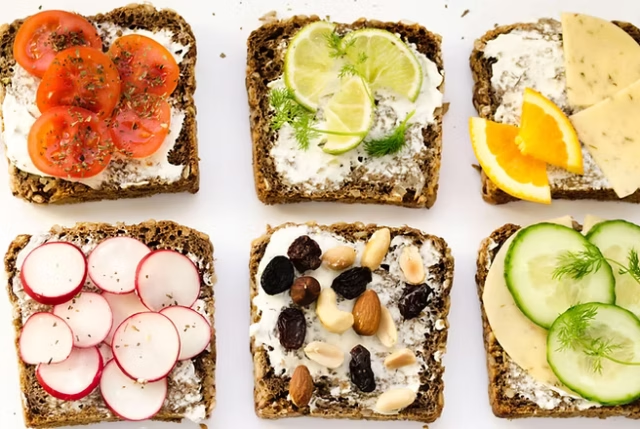
Try these simple swaps for brain-healthy snacks. Got more ideas? Leave them in the comments below.
How to Beat Sugar Cravings
Sugar cravings are intense, but they usually go away within 1-2 weeks if you cut out added sugars entirely. After getting off sugar, people feel more energy, better concentration, and sharper senses. I don’t recommend switching to artificial sweeteners. They harm the brain’s memory center and are linked to depression, cancer and — surprisingly — weight gain (which they cause be increasing appetite and disrupting the gut microbiome).
Healthy fats lessen sugar cravings, so eat more of these while cutting out sugar:
- Nuts, seeds, coconut
- Olives, hummus, avocado
- Yogurt
- Tofu
- Extra virgin olive oil
- Oily fish like salmon
Beyond Depression
Though most of the research has focused on depression, this nutritional approach also improved anxiety, ADHD, and sleep quality in smaller trials.
Feeding the Mind-Gut
When you crave junk food, it’s not just your brain that is doing the craving. The gut is lined with billions of bacteria — the microbiome — that send signals to the brain. Feed them sugar and fat, and they’ll crave more of the same. Feed them nutrients and fiber, and you’ll grow a more healthy microbiome that thrive on those foods.
Most of the foods on this diet improve microbiome health, especially nuts, fruits, vegetables, and fiber. Probiotic-rich foods like yogurt, pickles, sourdough bread, and fermented vegetables further those gains. A healthy microbiome sends positive signals to the brain, improving mental health by balancing stress hormones, the vagus nerve, and lowering inflammation. They even act as tiny neurotransmitter factories, producing serotonin, dopamine, and norepinephrine.
Learn more ways to improve gut health.
A Surprising Bonus: Weight Loss Without Counting Calories
Here’s something most people don’t expect from this diet — you don’t have to count calories. No tracking, no measuring, no obsessing over portions. And yet, research shows that Mediterranean-style diets like this one produce more weight loss over the long term than traditional calorie-counting diets.
Why? Because calorie counting is stressful. You’re constantly wondering whether you ate the right amount, and that stress actually works against you. Stress disrupts the hormones that control your metabolism, your sleep, and your mood — hormones like cortisol, insulin, and epinephrine. These hormones make up what scientists call the mind-gut connection, and this diet brings them back into balance.
The same hormonal disruption that causes weight gain also drives depression. By calming that stress response through food, this diet treats both at once.
Go at Your Own Pace
This diet should push you just enough to keep you focused and engaged — but not so much that it leaves you feeling stressed, guilty, or defeated. If it ever starts to feel overwhelming, slow down.
Start with foods you already enjoy and build from there. Rather than thinking about how food tastes in the moment, ask yourself: How will I feel 2–3 hours after I eat this?
You will discover genuinely wonderful flavors on this diet. They won’t hit you with the artificial punch of salt, sugar, and chemical additives — but they will satisfy you in a deeper, more lasting way.
Eat slowly. Savor what’s in front of you. And when you can, share a meal with people who lift you up.
— Adapted from the Depression and Bipolar Workbook by Chris Aiken, MD
Read More

In this free illustrated guide to the diet you’ll learn how to:
- Select brain superfoods
- Make brain-friendly popcorn, burgers, and fries
- Modify the diet for medical conditions, gluten-free, and vegetarian approaches
The Science
Clinical trials of the antidepressant diet
- Jacka FN, O’Neil A, Opie R, et al. A randomised controlled trial of dietary improvement for adults with major depression (the ‘SMILES’ trial). BMC Med. 2017 Jan 30;15(1):23.
- Chatterton ML, Mihalopoulos C, O’Neil A, et al. Economic evaluation of a dietary intervention for adults with major depression (the “SMILES” trial). BMC Public Health. 2018 May 22;18(1):599.
- Parletta N, Zarnowiecki D, Cho J, et al. A Mediterranean-style dietary intervention supplemented with fish oil improves diet quality and mental health in people with depression: A randomized controlled trial (HELFIMED). Nutr Neurosci. 2019;22(7):474-487.
- Francis HM, Stevenson RJ, Chambers JR, et al. A brief diet intervention can reduce symptoms of depression in young adults – A randomised controlled trial. PLoS One. 2019;14(10):e0222768.
- Bayes J, Schloss J, Sibbritt D. The effect of a Mediterranean diet on the symptoms of depression in young males (the “AMMEND: A Mediterranean Diet in MEN with Depression” study): a randomized controlled trial. Am J Clin Nutr. 2022 Aug 4;116(2):572-580.
Trials of single ingredients
- Aiken C, The Mighty Blueberry, Psychiatric Times, April 12, 2021.
- Aiken C, Almonds May Lift Depression in Diabetes, Psychiatric Times, May 19, 2021.
- Jackson SE, Smith L, Firth J, et al. Is there a relationship between chocolate consumption and symptoms of depression? A crosssectional survey of 13,626 US adults. Depress Anxiety. 2019;36(10):987-995.
- Grosso G, Micek A, Castellano S, et al. Coffee, tea, caffeine and risk of depression: A systematic review and dose-response meta-analysis of observational studies. Mol Nutr Food Res. 2016;60(1):223-34.
- Hirashima F, Parow AM, Stoll AL, et al. Omega-3 fatty acid treatment and T(2) whole brain relaxation times in bipolar disorder. Am J Psychiatry. 2004;161(10):1922-4.
- Simão VC, Prudente TP, De Prado Lopes Oliveira A, et al. Effect of extra virgin olive oil on mild cognitive impairment and dementia in older adults: a systematic review and meta-analysis of clinical trials. Clin Nutr ESPEN. 2026;73:102977.
Weight loss with the Mediterranean approach
- Estruch R, Martínez-González MA, Corella D, et al. Effect of a high-fat Mediterranean diet on bodyweight and waist circumference: a prespecified secondary outcomes analysis of the PREDIMED randomised controlled trial. Lancet Diabetes Endocrinol. 2019;7(5):e6-e17.
- Shai I, Schwarzfuchs D, Henkin Y, et al. Dietary Intervention Randomized Controlled Trial (DIRECT) Group. Weight loss with a low carbohydrate, Mediterranean, or low-fat diet. N Engl J Med. 2008;359(3):229-41.


